

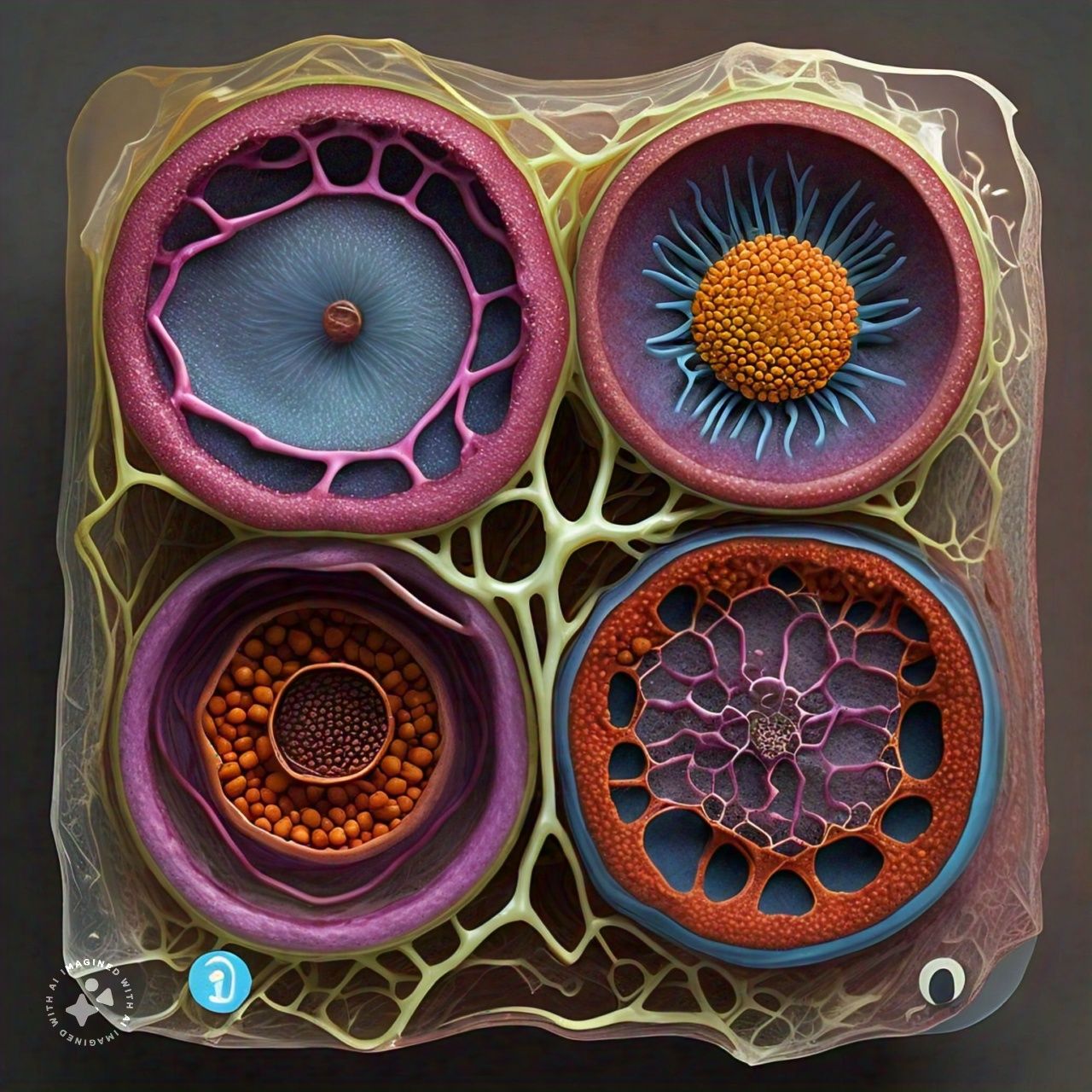
What is a sporogenous tissue ?
Sign Up to our social questions and Answers Engine to ask questions, answer people’s questions, and connect with other people.
Login to our social questions & Answers Engine to ask questions answer people’s questions & connect with other people.
Lost your password? Please enter your email address. You will receive a link and will create a new password via email.
Please briefly explain why you feel this question should be reported.
Please briefly explain why you feel this answer should be reported.
Please briefly explain why you feel this user should be reported.
Questions | Answers | Discussions | Knowledge sharing | Communities & more.
Sporogenous tissue is the specialized tissue in plants responsible for producing spores, the reproductive cells of plants. In flowering plants, the sporogenous tissue is located in the anthers and ovaries, while in coniferous plants, it is found in the male and female cones.
Sporogenous tissue:
1. Gives rise to spores (microspores and megaspores)
2. Is responsible for meiosis, the process by which spores are produced
3. Is located in the anthers (male) and ovaries (female) of flowering plants
4. Is located in the male and female cones of coniferous plants
5. Plays a critical role in plant reproduction and the life cycle
The sporogenous tissue in the anthers produces microspores, which develop into pollen grains, while the sporogenous tissue in the ovaries produces megaspores, which develop into embryo sacs. The fusion of pollen grains and embryo sacs leads to fertilization and seed formation.
The study of sporogenous tissue is important in plant reproductive biology, genetics, and breeding, as it helps us understand the mechanisms of plant reproduction and how to improve crop yields and plant diversity.